6 lifestyle tips for a brighter mood

6 Lifestyle tips for a cheerful mood “A healthy lifestyle can counteract depression!”Stephen Ilardi (Researcher University Kansas.) But how do you start with this? The American psychologist Stephen Ilardi drew up a 6-step plan based on various insights to get started with this! Medicines, talking, brain implants, … Stephen Ilardi is convinced that we as modern humans can live without it if we start living more to our nature. In his book ‘The Depression Cure’ he describes 6 lifestyle rules known as ‘Therapeutic Lifestyle Change’. Stephen is convinced that by combining these insights, you can get out of clinical depression on your own. Research at our own university confirmed the effectiveness of TLC. After all, the individual steps of the plan are based on thorough research. FEED YOUR BRAIN Omega-3 fatty acids are the building blocks of our brain. These are largely found in oily fish, nuts, and leafy vegetables. Ilardi also recommends an omega-3 supplement in your daily diet. DO SOMETHING Make sure you don’t have time to worry! Make sure you have nice company or a meaningful activity! Do you catch yourself worrying? Write your thoughts down and actively direct your attention to something else. MOVE Exercise is a great medicine for depression! It activates the production of neurotransmitters in the brain and stimulates the growth of new connections. When you sit on a chair all day, 3 x half an hour of brisk walking a week can do great wonders! FIND THE SUN Anyone who can enjoy the sun every day produces sufficient serotonin, melatonin and Vitamin D. These substances take care of your biological clock and ensure a healthy sleep! So go outside! CONTACT PEOPLE Anyone who feels lonely gets sick! Depression causes you to lose the appetite for company and therefore prefer to be alone. Break that vicious circle! Buying a pet can be a good start! SLEEP Sleep problems and depression are directly linked! So make sure you have a healthy sleeping pattern! Avoiding caffeine, nicotine and alcohol can help with this. Take care of your biological clock! Source: Stephen Ilardi, The Depression Cure. Six steps to get rid of your depression without medication
Walking is good for your brain!

Walking is good for your brain! Regardless of the weather, it is always a good idea to leave the car at home to stretch our legs. Walking or running is not only good for the body, it also benefits our mind! Research has shown that exercise does affect our brain blood flow. Even just walking has just as much of an effect on blood flow as running. While cycling has no effect at all on blood flow! This may also explain why people can think better or feel their minds clear up while exercising. So we prefer to run or walk rather than cycle!
Endless connectivity

Endless connectivity People today have more freedom because we can connect with anyone anywhere in the world in a split second. We can work wherever we want thanks to our smart devices. But in many cases, this limitless connectivity can also bind us in an unhealthy way. Our brain is mainly divided into three parts when it comes to working and/or learning. Our reflex brain, which is a fast-moving autonomous security guard, is activated the moment there is only a hint of danger. We share this with the other animals on this beautiful planet. What is typical of humanity is our thinking brain and our archiving brain. With our thinking brain we can reflect, analyze the past and make plans and projections for the future. Our archiving brain processes new information/skills/sensations so that it frees up capacity from our thinking brain, which is limited and slow to use compared to the reflex brain. This reflection and learning process takes place day and night. With today’s endless connectivity and abundance of data, we tend to skip the archiving part because this part uses the same part of our brain as the thinking brain. This results in restlessness, stress and much lower productivity in our behavior and learning cycle. That’s why it’s important to regularly turn off your devices and disconnect from the world so that you can reconnect with yourself. Don’t let the beeps chase you! By using technology in a healthy way, with regular offline breaks, you can increase your productivity times four and halve your stress level. Most smartphones offer an overview of your ‘screen time’ use. There are also several “apps” that you can use to record and analyze your online behavior. Take advantage of these applications and try to reduce your “online time” every week. Also be aware of the amount of time you spend in front of your computer: how much of this is really necessary, and how much is just unnecessary connectivity like surfing the web or scrolling through Facebook? Source: Neuropsychiatrist Theo Compernolle – ‘Unleash your brain
Attention please!

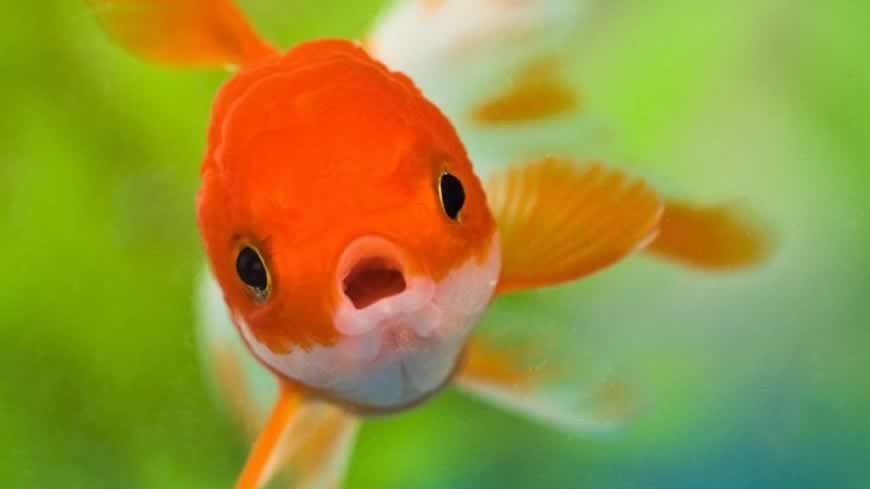
Attention please! The average attention span of a goldfish is nine seconds. Researchers at Microsoft have found that for humans this has dropped from 12 seconds to 8 seconds due to our digitized lifestyle! The researchers in Canada surveyed 2,000 participants and studied the brain activity of 112 others. They discovered that since the revolution of mobile telephony (from about the year 2000) our average time during which we can focus our attention undivided on a task has decreased from 12 seconds to 8 seconds. “People with a decidedly digital lifestyle have a hard time in an environment that requires long-term attention. It is difficult for them to filter out irrelevant stimuli – they are more easily distracted by different media outlets, ”says the report. However, according to Microsoft researchers, this should not be seen as a setback of our human mind. It indicates that the human ability to “multi-task” has simply improved. Multi-tasking is the rapid switching between simple tasks by the brain, so we can deal better and better with an over-activated brain. Our brains adapt to the possibilities of new technologies. It should be noted here that other scientific research has shown that multi-taskers have less control over their working memory and are distracted by almost everything in daily life. This takes a lot of energy! The question is also, do we maintain our ability to focus longer when necessary? Some scientists fear the negative influence of the internet and continuous connectivity on our brains. The volatile and irregular reading style that people use online makes it more difficult for us to focus on a normal book for a long time. The ability to think deeply and process complex information is closely related to this type of long-term attention. Another reason to limit your endless connectivity regularly, as you could read in one of our other blogs. Bravo, you have been able to concentrate for more than 8 seconds to read this article, there is still hope